Featured
What's Ahead in Bankruptcy Counseling and Debtor Options ...
The Greatest Guide To Reviewing Debt Forgiveness Organiza...
The Ultimate Guide To Understanding Your Debts You Still ...
Some Known Facts About Monetary Implications Fees for Deb...
The Ultimate Guide To Understanding Your Debts You Still Owe After Bankruptcy: What You Can’t Erase : APFSC Options Before Consulting
Table of Contents
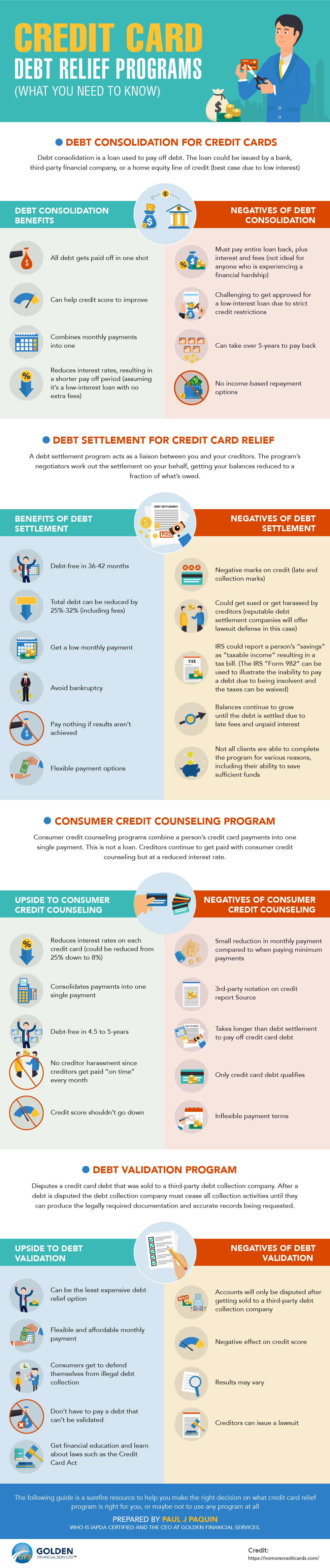
If you stop paying your costs, you will typically incur late fees, penalty passion and various other charges, and lenders will likely tip up their collection initiatives against you. A few of your financial institutions may decline to work with the firm you choose. Oftentimes, the financial debt negotiation business will be incapable to resolve all of your financial obligations.
You might be billed costs for using this account. Collaborating with a financial obligation negotiation business may cause a creditor submitting a financial debt collection suit versus you. Unless the debt negotiation company works out all or the majority of your debts, the built-up fines and charges on the unclear financial debts might erase any kind of savings the financial debt negotiation company accomplishes on the debts it resolves.
The Main Principles Of "Bankruptcy Destroys Your Credit" Debunked
Warning: Financial obligation settlement might well leave you much deeper in the red than you were when you started. Many debt settlement business will certainly ask you to quit paying your financial debts in order to obtain lenders to discuss and in order to gather the funds required for a negotiation. This can have an unfavorable result on your credit report and might result in the creditor or debt enthusiast submitting a lawsuit while you are collecting funds needed for a negotiation.
Individuals might represent themselves in bankruptcy court or get in touch with a bankruptcy lawyer if they feel they require to pursue this choice. In a Chapter 7 bankruptcy, the person might need to offer a few of their assets to pay a section of the arrearage. In a Chapter 13 bankruptcy, the court restructures the superior debts so the individual may pay all or some of the agreed-upon balance over three to 5 years.
Guaranteed financial obligation, like a home mortgage, which includes security (usually the funded house), and unprotected financial obligation, like charge card financial obligation, are managed differently during an insolvency. And there are various kinds of insolvencies, so be sure to research study which option might be best for your scenario.
Does Debt Forgiveness Work for Most People - Questions
In order for this to work, you need to reserve a marked amount of cash each month that will be utilized to make the settlement deal to your financial institutions. But similar to various other forgiven financial debt, the quantity you do not pay might activate a tax obligation bill. It's most likely you'll have damages to your debt rating because few companies will certainly bargain with you if you're present on your settlements.
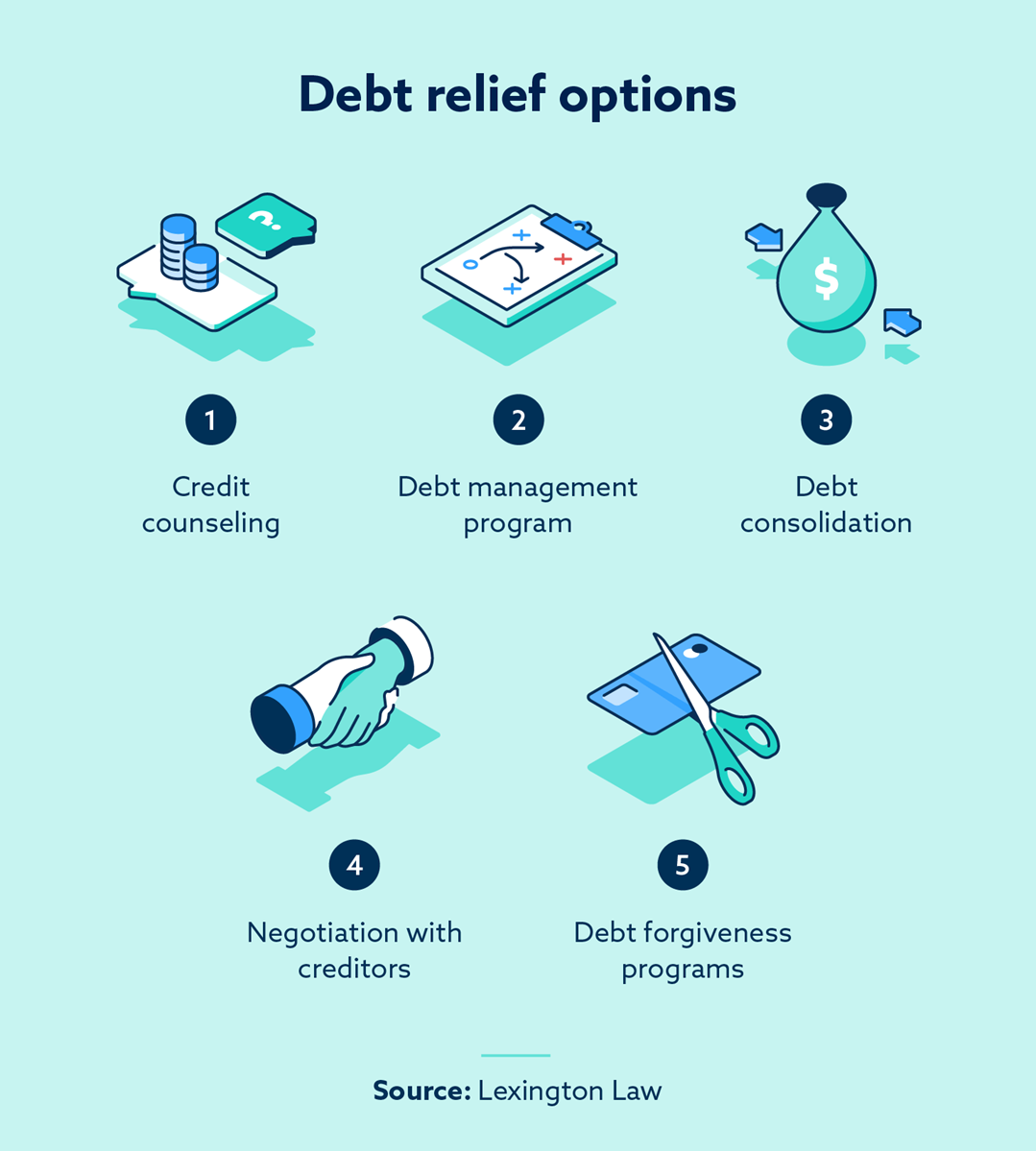
One more alternative that individuals can take a look at is filing for Phase 7 bankruptcy. Insolvency filings stop collection actions and claims, and a Phase 7 declaring can legally remove financial debt and end garnishments. To discover financial obligation alleviation options, fill out our kind or, better yet, call us currently and we'll match you with the most effective remedy for your situation completely free.
Little Known Questions About Worth of Professional Bankruptcy Guidance.
So, do not have a hard time any longer. Offer us a call. When life happens, we're here for When Life Occurs 844-402-3574 Table of Component Bank card financial obligation forgiveness is an economic relief alternative that allows people battling with high balances to have a portionor, in uncommon cases, the entiretyof their debt eliminated.
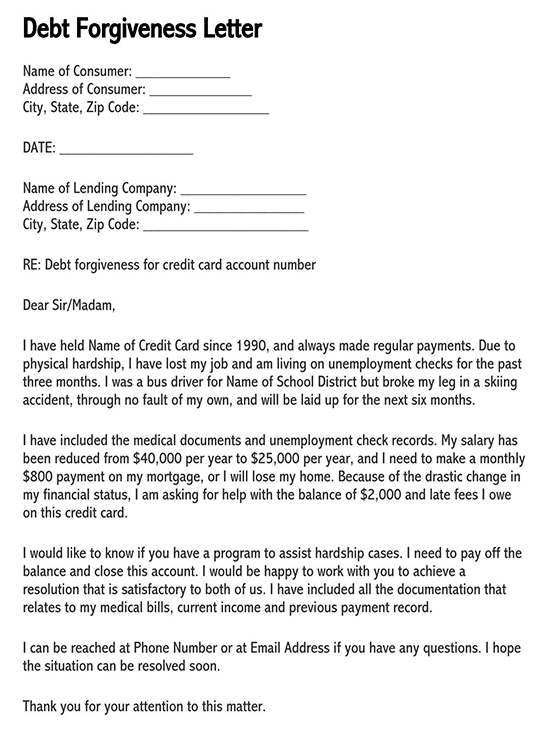
Unlike personal bankruptcy, which is a lawful procedure, or financial debt negotiation, which includes paying a worked out amount, financial obligation forgiveness implies the lender terminates a section of what you owe. For customers drowning in charge card debt, this can be a lifeline. However, it's important to comprehend exactly how it functions, that qualifies, and the possible downsides before seeking this alternative.
This is usually booked for severe scenarios where a consumer is economically incapable of settling the full quantity. Some charge card business supply programs where they reduce or forgive component of the financial debt for customers who are having a hard time due to job loss, clinical emergency situations, or other financial dilemmas. This entails discussing with lenders to pay a lowered quantity for shutting the account.
The Main Principles Of Widespread False Beliefs Regarding Debt Forgiveness
: Once a debt is forgiven, debt collector have no insurance claim on that particular amount.: For those sinking in debt, forgiveness provides a chance to reset their funds and start rebuilding their credit.: Oftentimes, forgiven debt is thought about taxable earnings by the internal revenue service, which indicates you might wind up with an unexpected tax obligation costs.
It requires settlement, paperwork, and often a long procedure. Plus, if a lender forgives a portion of your financial obligation, they might still need partial settlement. Not all financial obligation is forgiven the same means. Whether you qualify relies on your economic scenario, lender plans, and available programs. Some loan providers supply structured hardship programs, while others may just think about forgiveness if you go after settlement or insolvency.
This is not a typical practice, and it normally occurs under specific circumstances, such as: (job loss, special needs, clinical emergency). (lenders may create off old debts as uncollectible). where a consumer pays a minimized amount in exchange for the remainder being forgiven.: A lender minimizes the overall quantity owed, yet you still have to pay a portion.
Lenders favor negotiation over outright forgiveness because it guarantees they recoup several of the cash. Financial obligation mercy is usually a last resort when they think there's no chance of full settlement. Mercy programs are not available to everybody. To certify, you usually need to fulfill specific challenge requirements: (joblessness, organization failure, or handicap).
About Why Waiting to Seek Debt Help Causes Things More Difficult
: Not-for-profit credit rating counseling organizations, such as those connected with the National Foundation for Credit Score Counseling (NFCC), help customers recognize their economic options and overview you to a program that finest fit your situation.: A DMP is not precisely financial obligation mercy, however it permits customers to pay back debts on a lot more beneficial terms, often at lower rate of interest prices.
Charge card financial obligation forgiveness programs usually prioritize consumers experiencing significant financial difficulty. Eligibility criteria frequently include task loss, medical emergencies, or handicap leading to earnings loss. A high debt-to-income (DTI) proportion, showing a huge portion of earnings committed to financial debt repayment, is an additional typical element. Programs may also think about scenarios where crucial expenses, such as clinical costs or standard living costs, go beyond revenue, creating uncontrollable financial strain.

Table of Contents
Latest Posts
What's Ahead in Bankruptcy Counseling and Debtor Options Fundamentals Explained
The Greatest Guide To Reviewing Debt Forgiveness Organizations to Find the Best Partner
The Ultimate Guide To Understanding Your Debts You Still Owe After Bankruptcy: What You Can’t Erase : APFSC Options Before Consulting
More
Latest Posts
What's Ahead in Bankruptcy Counseling and Debtor Options Fundamentals Explained
The Greatest Guide To Reviewing Debt Forgiveness Organizations to Find the Best Partner